From the Blog: Celebrating Occupational Therapy Month (Part II)
Spotlight on Our OTs! (Part II)
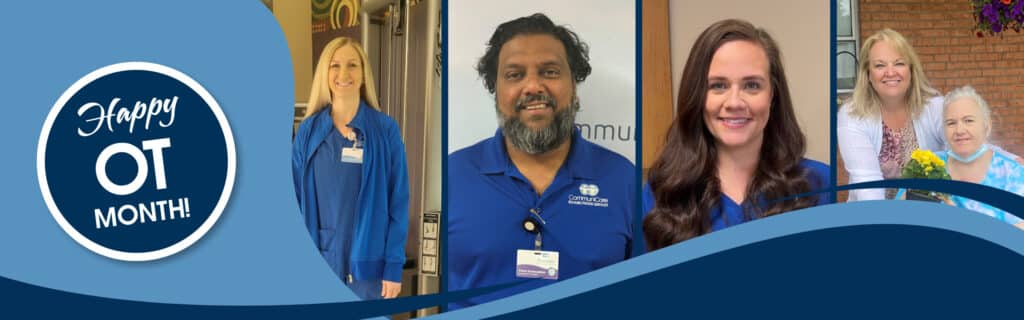
April is Occupational Therapy Month, and we’re continuing our celebration by shining a light on more of the incredible therapy team members in our CommuniCare centers. In this second part of our spotlight series, we spoke with Rita Fey from Cumberland Healthcare Center, Pravin Gnanasekhar from Riverside Healthcare Center, Emma Patterson from Maplewood Healthcare Center, and Karen Smith from Keyser Healthcare Center. They shared what inspired them to pursue this career, memorable moments with patients, and what fuels their passion for the field.

Where are you from and what facility do you work at?
Rita: I’m from Bedford, PA, and currently work at Cumberland Healthcare Center in Cumberland, Maryland.
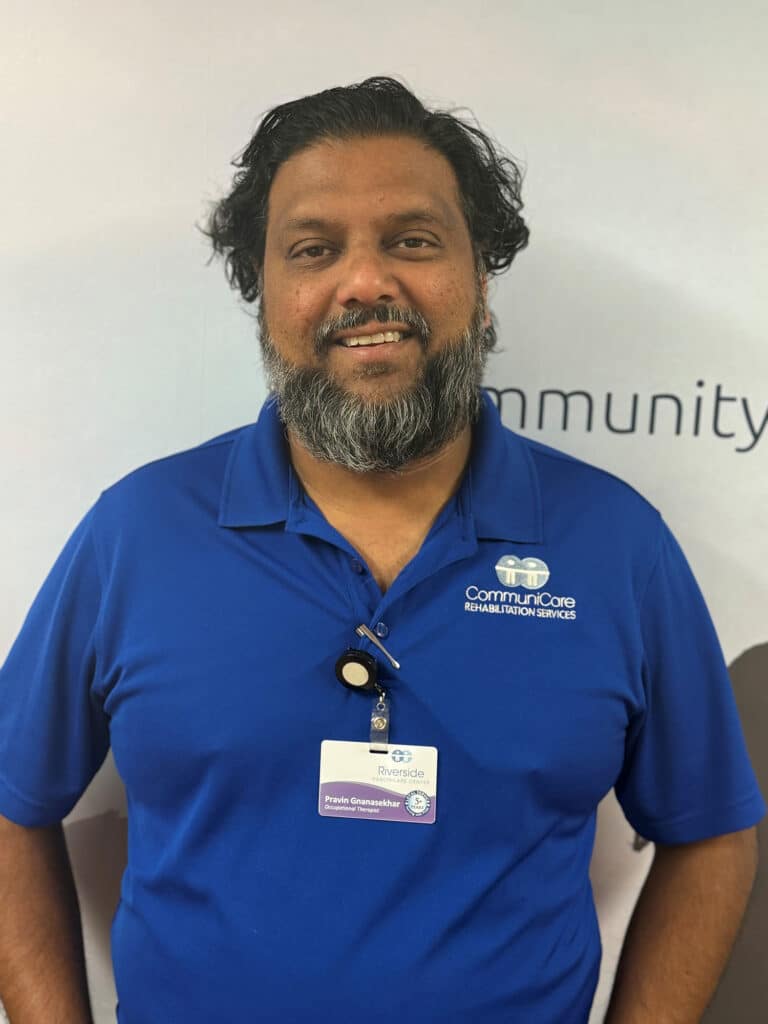
Pravin: I’m from Chennai, India, but currently reside in Centerville, OH. I work at Riverside Healthcare Center.
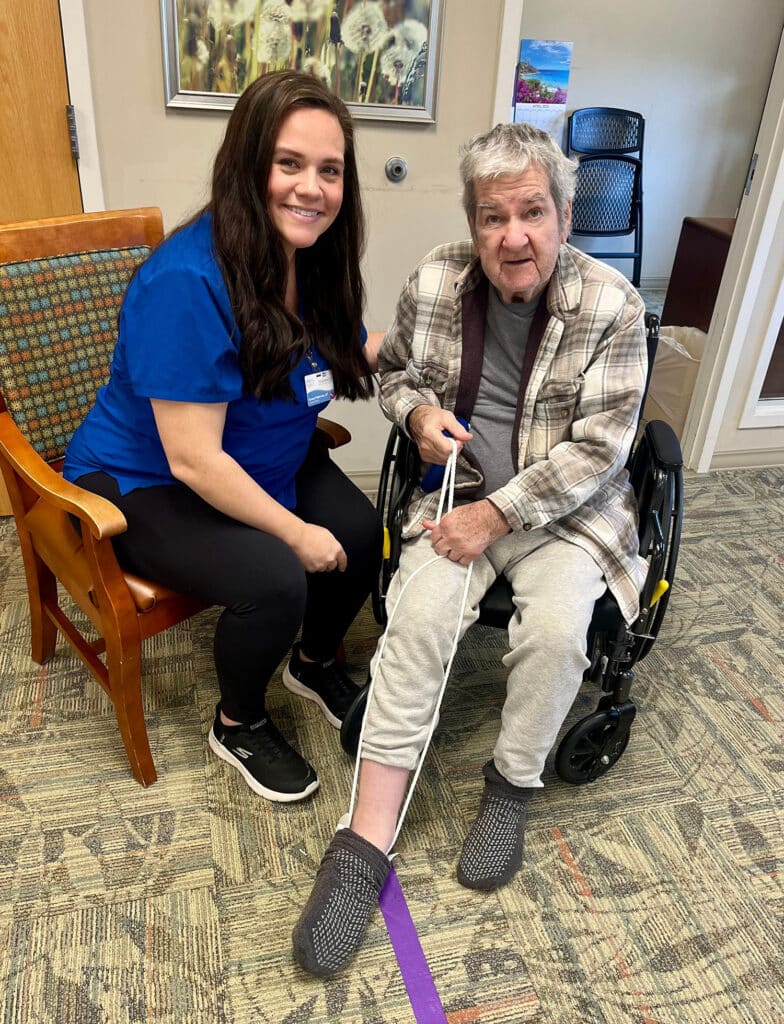
Emma: I am from Salem, WV, and I have worked at Maplewood Healthcare Center for seven years.
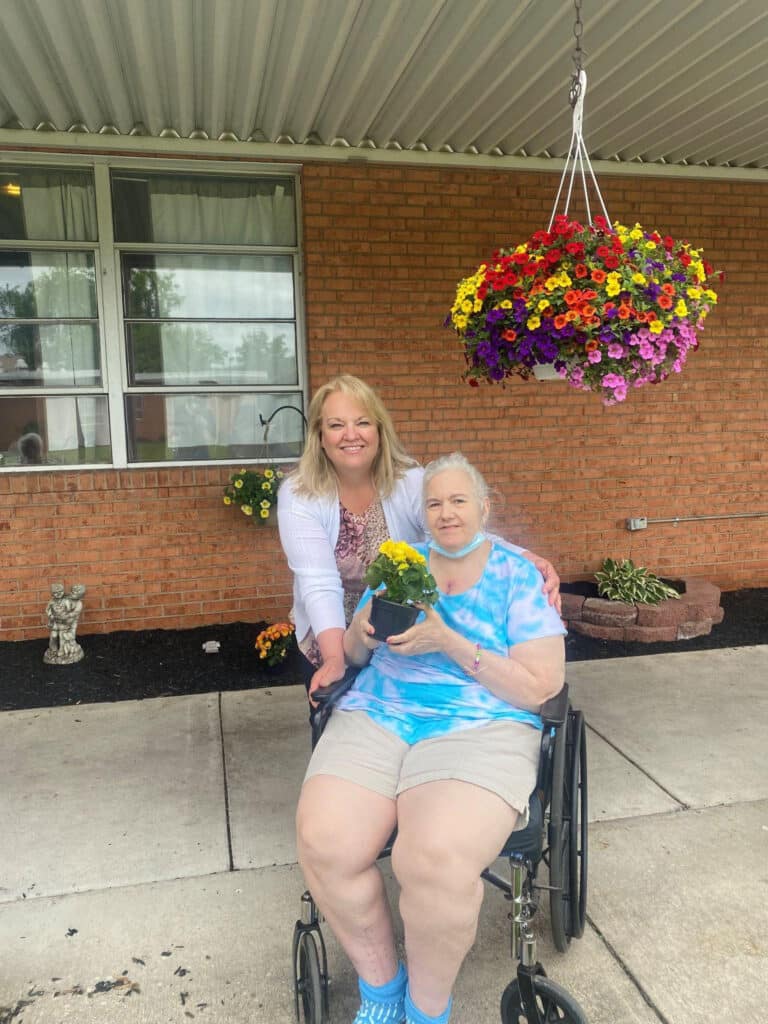
Karen: I’m from Keyser, WV, and currently work at Keyser Healthcare Center.
How long have you been working as an Occupational Therapist (OT) or Certified Occupational Therapy Assistant (COTA), and what drew you to this specific career path? Where did you receive your training?
Rita: I have been working as an OT for 30 years and received my training from Allegany College of Maryland. I wanted a career where I could work with others and be a part of making a difference in their lives as well as mine. I enjoy the success of others as much as my own.
Pravin: I have been working in the field for 26 years and received my degrees from AU/ Mumbai University and The Ohio State University. To be honest, I had no idea what OT was when I started looking for a career. The lure of a better life in the “shining city on a hill” and the gratification of being intricately involved in people’s day to day life enticed me to choose this path.
Emma: I have been working as an OT for nine years. I was always interested in a science-based career but I also wanted to work with people, so OT seemed like the right combination for me. I went to Chatham University for my master’s in OT.
Karen: When I graduated from high school, I didn’t have a clear career path. I went to college for two years and then took a position as a secretary/accountant in the school system. It was there that I met an amazing COTA who inspired me to go back to college and pursue a career as a COTA from the Allegany College of Maryland! Now, I’ve been working in the field for 20 years.
In your own words, how would you describe the role of an OT/COTA?
Rita: OTs are catalysts in empowering or motivating others to reach their goals and optimal functional independence.
Pravin: “Every task is a privilege and every situation is a blessing” – this aptly suits my perspective of OTs’ role, as it transcends beyond just the client/patient relationship, but applies on a personal level with every individual we interact with every day.
Emma: OTs in long-term care and rehab to home settings help people function independently while doing their daily occupations. Occupations are the functional things people do every day such as getting dressed, making breakfast, taking a shower, going to the bathroom, etc. We work on solving problems that may hinder independence or safety while participating in daily activities.
Karen: A COTA plays a hands-on role in helping patients achieve their goals. We guide patients through exercises, activities, & ADLS to improve strength, coordination, mobility, and independence. This can include anything from helping them relearn how to dress themselves, to teaching safety with ADL transfers, to adapting utensils.
What is your favorite part of being an OT/COTA or working in the skilled nursing and long-term care (LTC) space, and what keeps you passionate about your work?
Rita: I see even more of a purpose for OT in the therapy world than I did 30 years ago. There is so much opportunity to travel down the changing paths of patient care and different client types, I never grow tired of coming to work. I very much enjoy that I work with a team that shares the same level of enthusiasm for our craft.
Pravin: Passion does not stem solely from an innate ethos driven by a moral compass to do good unto our fellow human beings and patients, as was instilled in us during our training. The real passion to work in this facility ebbs from a team that goes well beyond what is basic in our profession. While I may feel like a pencil pusher at times, it is the people around me (both patients and co-workers) who keep me grounded and going. The top reason is a simple “thank you” from our residents.
Emma: My favorite part about being an OT in the skilled nursing home setting is building relationships with the long-term residents. I have known some of the residents at the center for years, so being able to help them is so much more rewarding. Many of the residents come into the therapy gym just to visit with us even when we aren’t working with them directly and it makes our jobs so fun.
Karen: I love working alongside my coworkers to make a positive impact on our patients. Seeing patients reclaim their independence and dignity is what keeps me passionate about my work. LTC is unique and rewarding because of the consistency of seeing patients daily throughout their rehab stay.
Can you describe a moment or experience in your career that made you feel especially proud or fulfilled?
Rita: Several years ago, we had a new admit that I truly thought was too ill to even wake up, let alone have a chance of ever going home. Therapy slowly worked with her, grading therapy goals to her tolerance. She started to talk, then made small movements over extended amounts of time, then small task completion, and finally one day she walked! We kept challenging this patient, who we once thought may never open her eyes…now she lives at home and babysits her grandchildren. I will never forget the valuable lesson I learned from believing!
Pravin: Working in this facility gives me a sense of pride personally, because when I started here years back, behavioral health was a new concept and not my cup of tea. But now, I feel at home working with this clientele and that change in my thought process and paradigm is my personal achievement. Another aspect that gives me fulfillment is seeing the students whom I taught years back as an assistant professor, do well in their own career, all over the world.
Emma: I remember having a short-term rehab-to-home patient who came to us severely depressed after a hospitalization for minor health issues. She was very reserved at first and her mental health kept her from functioning independently. After building a relationship with her and having OT treatment for a few months, she was like a new person who was brought back to life. She was able to discharge from the center and go to an apartment by herself when weeks earlier we were all unsure what her future would hold. My experience with her was one of the most rewarding.
Karen: Having patients come back to visit or call after being discharged and telling me that I made a difference while they were in the facility is the most fulfilling part of my career. Especially when they had a very poor prognosis and had lost all hope and motivation and then I was able to be a huge part of their recovery. At times it was literally getting them up, making them feel “normal” again by doing everyday ADLs as simple as brushing their teeth and hair. Sometimes it’s the little things that make the biggest impact on people!
What is the most rewarding part of working with residents and patients in your current facility
Rita: Our LTC population often gives the best advice. Even though it is our job as therapists to assist them along the way to their recovery, they often somehow become a valuable part of our day. We learn from each other! Their wins are our wins! I greatly enjoy getting to know the residents and their family members and building a plan that allows them the luxury of returning home where they really want to be. Those days are the best!
Pravin: As a therapist, it is uplifting to see patients who come in very debilitated, but with our help and their efforts, are able to overcome obstacles and hurdles to soar up. Some patients leave, but the majority stay as our residents. To come to know each of them at a personal level/their stories and their life experiences is a reward in and of itself. Also, for them to accept us therapists as part of their day-to-day life in this facility is a privilege.
Emma: The most rewarding part of working with my patients is being able to make people smile and make a small difference in their day. Sometimes all it takes is a quick conversation in the hallway and an “I love you” to make people perk up. Not everyone has a family that visits often, so being able to be that “stand in” family sometimes for patients is so important.
Karen: I love seeing the progress they make sometimes in the smallest ways, but with the biggest impact on their lives. It’s those moments of regained independence that reminds me why I do what I do. I also value the relationships I build with patients and their families. Many are going through difficult transitions of being away from home for short term rehab or preparing for long-term care. I get to be a source of support, motivation, and positivity during some of their most vulnerable times and make a difference in their recovery and overall well-being.
What do you enjoy doing in your free time when you’re not working?
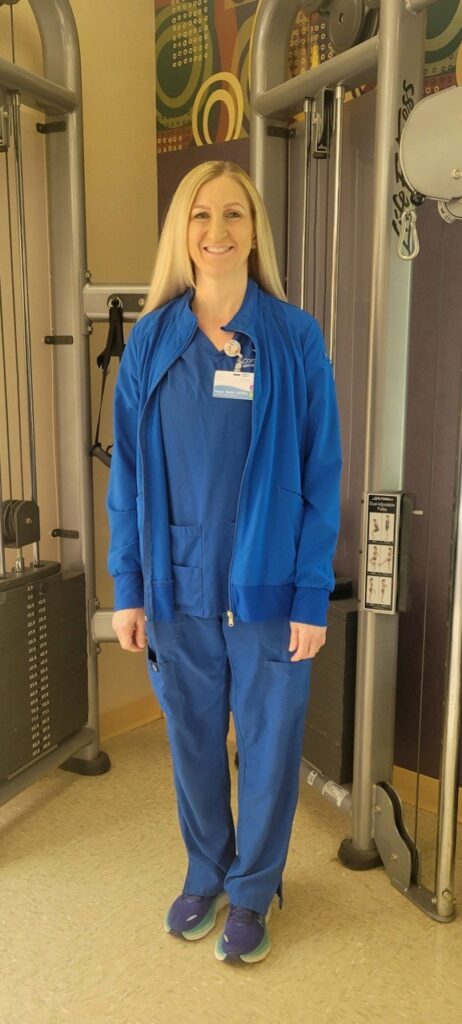
Rita: I enjoy anything outside with my family. I spend a great deal of time with my grandchildren. I love to garden.
Pravin: I love technology. I love tinkering around, repairing gadgets, which include laptops, gaming consoles, cellphones, etc. Learning new technologies and evolving trends keep me on my feet, and the challenges it throws keep me seeking to learn and understand more.
Emma: In my free time I enjoy working out, spending time with my husband Ryan and my dog Rosie, and being outside.
Karen: Outside of work, what I love most is spending time with my family. I’ve been married for 26 years, and we have two grown daughters and a beautiful, spunky one-year-old granddaughter! They’re my biggest support system and my greatest joy! I also love to travel and step away from the everyday routine of life as often as possible!
Can you share something fun or unique about yourself that most people wouldn’t know?
Rita: I love woodworking. My husband and I have made the doors and much of the furniture in our home.
Pravin: I like to garden and seeing new life spring forth gives me immense joy. I also like to do woodworking and have successfully designed several pinewood Derby cars for my kids, while they were little, and they won first place for design for five consecutive years.
Emma: I am an organizational guru. In my house everything has a place, a container, and a label.
Karen: I enjoy planning parties and events and have become known as the “balloon arch/backdrop girl” for all of my friends and family! I also love to do digital scrapbooking!
What would you want people to know about OT as a profession, especially as we celebrate OT Month?
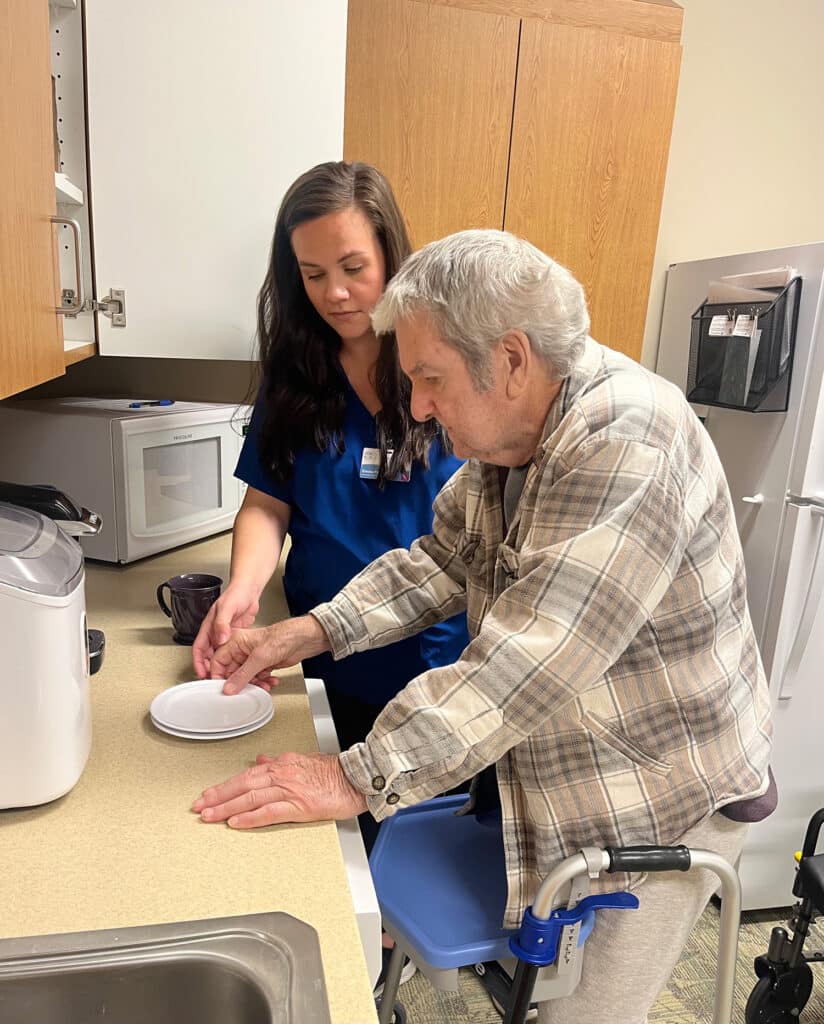
Rita: I would want people to know that OT can offer services to all ages and walks of life. That OT is about living a better life. It’s about using our current strengths and abilities to get to our future selves. OT always looks to the positive and seeks out the best parts of an individual to promote growth. One of the best aspects of occupational therapy is the holistic approach we take when considering our patients and how they can continue on their desired path. Individualism is still pretty cool!
Pravin: OT may be described as a means to make an individual whole again, not just in the physical sense, but in a holistic manner, so as to make them perform at their peak level. But as far as I am concerned, it is a privilege to be able to be alongside someone’s life journey as they navigate through tough times and help them in those situations.
Emma: I want people to truly understand what REAL occupational therapy is and why it is important. We often get grouped in with physical therapists because I believe we aren’t always showing others our real value and skill. I would like people to know how amazing we are at adapting a task, teaching compensatory strategies to people, and using meaningful tasks to help patients gain their dignity and independence again.
Karen: OT makes a significant impact in nursing homes, ensuring that all patients, regardless of age, can continue to live with dignity, independence, and purpose. OT focuses on daily activities (i.e. dressing, bathing, eating, functional mobility) by taking a holistic approach of physical, social and emotional well-being of our patients. We strive to empower our patients to live as independently in the nursing home as possible, even when facing physical or cognitive challenges. OT is more than just therapy, it is about enhancing life at every stage!