From the Blog: Celebrating Occupational Therapy Month
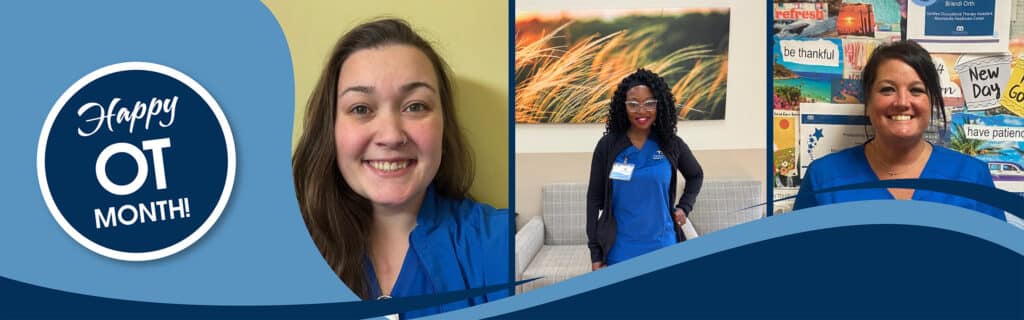
Spotlight on Our OTs!
April is Occupational Therapy Month, a time to recognize and celebrate the important role that occupational therapists play in helping individuals regain independence and enhance their quality of life. To shine a spotlight on the incredible occupational therapists in CommuniCare centers, we spoke with three of our very own: Jordan Romero from Greenwood Healthcare Center, Angeline Musunga from Ivy Woods Healthcare Center, and Brandi Orth from Moundsville Healthcare Center. They shared insights into how they found their career path, their daily work, and what drives their passion for helping others.
Where are you from and what center do you work at?
JORDAN: I’m originally from Greenwood, IN, and currently work as an occupational therapist at Greenwood Healthcare Center.
ANGELINE: I’m from Zimbabwe and work at Ivy Woods Healthcare Center in Cincinnati, OH.
BRANDI: I’m from Wheeling, WV, and work at Moundsville Healthcare Center.

How long have you been working as an occupational therapist (OT), and what drew you to this specific career path? Where did you receive your training?
JORDAN: I’ve been practicing as an OT for three years. I was drawn to occupational therapy because of its deeply personal, holistic, and empowering approach to care—helping people engage in the activities that bring meaning and purpose to their lives. I received my doctorate in occupational therapy as well as a master’s degree in gerontology from the University of Indianapolis.
ANGELINE: I have been working in the field for 12 years and got my degree from Western Michigan University. I was drawn to occupational therapy after my aunt had a stroke—I wanted to learn how to help her and others with strokes, traumatic brain injuries and other medical conditions improve and regain their independence.
BRANDI: I have been working in the field for 13 years and was trained at the Kaplan Center Institute in Pittsburgh, PA. I want to make a difference and help people.
In your own words, how would you describe the role of an OT?
JORDAN: OTs help people do the everyday activities—called “occupations”—that are most important to them. Our goal is to support independence, function, and quality of life, even when someone is dealing with illness, injury, or age-related changes. These activities can be anything from getting out of bed, making a cup of coffee, preparing a meal, taking a shower, doing a favorite hobby, grocery shopping, managing medications, or spending time with friends.
ANGELINE: Our role is to assist people in achieving independence with their daily living tasks so they can function at their highest level and have quality of life with the least amount of assistance from others.
BRANDI: The role changes daily based on the patient and diagnosis—anything from self-feeding, dressing, cooking, strengthening and crafts.
What is your favorite part of being an OT or working in healthcare? What keeps you passionate about your work?
JORDAN: My favorite part of being an OT is getting to really know the residents—learning their stories, their routines, what makes them smile—and then watching their progress, even if it’s just a small win. What keeps me going is knowing that what we do helps people hold on to their independence, their dignity, and the little things that bring joy to their everyday lives. It’s a privilege to be part of that journey.
ANGELINE: I love working with the residents, having a relationship with them, and seeing all of their improvements along the way.
BRANDI: I enjoy working with people, learning about others’ lives, and helping them gain the independence to return home, or achieve a better quality of life in the nursing home.
Can you describe a moment or experience in your career that made you feel especially proud or fulfilled?
JORDAN: I once worked with a younger resident who was facing several challenges, including limited support and social isolation. We quickly built rapport through our shared interest in video games, which helped establish trust early on. From there, I was able to incorporate gaming into our sessions as a therapeutic tool—not just for leisure, but to promote emotional well-being, social connection, and cognitive engagement. By adapting his environment and routines to reduce anxiety and support participation, we brought a favorite activity back into his life in a meaningful way. It was a powerful reminder of how OT can use creative, personalized approaches to make a real impact.
ANGELINE: I’m proud of my current role and the team that we have built at Ivy Woods. We have come together to create an amazing atmosphere for our residents. I am so proud of them!
BRANDI: I have a lot of moments and special memories throughout my career when patients have come in dependent on our help and leave with the ability to be independent. Patients that come to visit or call to tell of their accomplishments and thank me for helping them are the best moments I have.

What is the most rewarding part of working with residents and patients in your current facility?
JORDAN: The most rewarding part is witnessing the resilience of our residents and helping them reclaim abilities they thought were lost. Every smile after a successful session reminds me why I love this work.
ANGELINE: The most rewarding part of working with residents is seeing their increase in desire to participate with therapy services. We now have residents wanting to come to the therapy gym and work with our team to improve their lives. It is great to see their internal drive for improvement increase and expand.
What do you enjoy doing in your free time when you’re not working?
JORDAN: I enjoy spending time with my husband and our daughter, Natalie, who keeps us laughing and busy. I also like playing video games and catching up with friends over coffee.
BRANDI: I enjoy traveling and spending time with my daughters and grandkids.
Can you share something fun or unique about yourself that most people wouldn’t know?
JORDAN: I helped design and publish a screening tool called SOCS-OTS, which helps identify barriers cancer survivors face in daily life. It’s a project I’m really proud of, as it merges research and practice in a meaningful way.
BRANDI: I take great enjoyment in planning and executing activities to generate joy in my fellow coworkers, particularly Jefe.

What would you want people to know about OT as a profession, especially as we celebrate OT Month?
JORDAN: OT is about more than just rehab—it’s a profession rooted in creativity, compassion, and resilience. In the nursing home setting, we meet people where they are, often during some of the most vulnerable moments of their lives. Our work goes beyond physical recovery—we help residents reclaim their routines, preserve their dignity, and stay connected to the things that make life meaningful. OT Month is the perfect time to recognize how vital and life-affirming this work truly is.
BRANDI: We specialize in our patients’ unique needs to help them become more independent. We don’t just wipe butts!